
Introduction
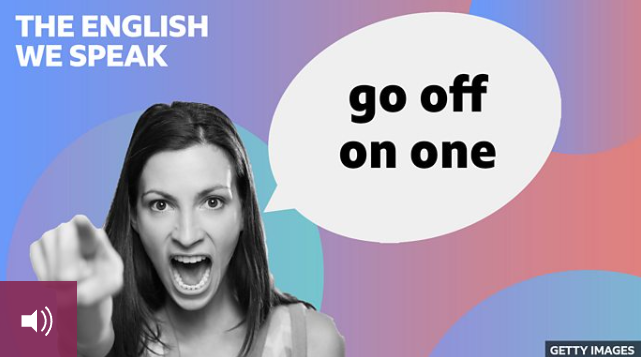
Surprise parties are meant to be fun, but sometimes they go wrong and people can get very angry. That’s what happened to Feifei in this episode. We can tell you an English phrase to help you explain that.
Transcript
Feifei
Hello, and this is The English We Speak with me, Feifei…
Neil
…and me, Neil. Have you seen how angry Rob is today? Do you know what happened?
Feifei
Err, yes. You remember, it was his birthday yesterday? I decided to throw him a surprise birthday party!
Neil
That’s a really nice thing to do. Does he hate surprises?
Feifei
Now he does. You see, I made it such a surprise that I forgot to tell anybody that it was happening. So, when he got to the party venue, no one was there.
Neil
That sounds awful. Well, at least I know why I didn’t get invited. I was quite annoyed you’d forgotten me!
Feifei
Well, I’m glad you didn’t go off on one as well!
Neil
‘Go off on one’ – is that today’s expression?
Feifei
Yes, it is! I thought we could teach something while I hide from Rob. ‘go off on one’ is an informal expression and means ‘to become suddenly very angry’.
Neil
Right. Let’s listen to some examples of this expression while I talk to Rob.
Examples
When the order got lost in the post, the customer rang up and went off on one.
Please, don’t go off on one, but I’ve lost your keys.
My mum went off on one when she found out I’d broken the washing machine. I was only trying to help.
Feifei
In this programme, we’re learning about the expression ‘go off on one’ which means to ‘suddenly get very angry’. Neil, what did you say to Rob? He’s really calm now.
Neil
Well, I just told him that you were going to throw him the most amazing party of his life tonight to say ‘sorry’.
Feifei
Tonight! That’s ridiculous! I’m far too busy today!
Neil
Don’t worry – before you go off on one – I promise to help you with the planning.
Feifei
OK then. Bye!
Neil
Bye!