
Introduction
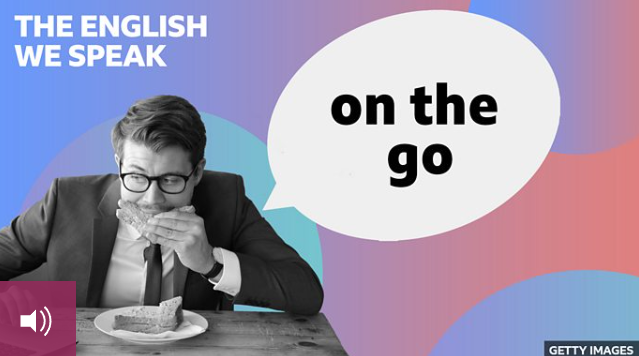
If you’re always busy, you’re always ‘on the go’. Learn how to use this phrase here.
Transcript
Beth
Welcome to The English We Speak with me, Beth.
Feifei
And me, Feifei.
Beth
We have an expression that means you’re busy and active. It can be positive or negative. It’s ‘on the go’.
Feifei
‘On the go’. Can you tell us how we use it, Beth?
Beth
I can. You’re always busy Feifei, and you’re looking a bit tired if you don’t mind me saying so, but it’s no surprise because you are always on the go.
Feifei
Well, honestly, it’s quite difficult having to balance work, children and friends. I’m always on the go!
Beth
You need to take a rest! So, ‘on the go’ means busy, active and not relaxing. It usually means you’re trying to do lots of different things during the day.
Feifei
Anyway, you’re always on the go too! How do you manage it?
Beth
Well, I just came back from my holiday. I made sure I wasn’t on the go at all. I just sat and read my book all day. Let’s hear some more examples.
Examples
Calum is away for work again. He’s always on the go.
I’m usually on the go early, so it doesn’t matter what time you arrive, even if it’s before breakfast!
She’s so tired. She’s always on the go since starting her new job.
Feifei
You’re listening to The English We Speak from BBC Learning English, and we are learning the expression ‘on the go’, which means you’re always busy and active.
Beth
Now, this phrase is very commonly used with adverbs of frequency, like ‘always’, ‘usually’ and ‘never’.
Feifei
Yes. I could say I’m always on the go during the week because of work, school pickups and other activities, but at the weekends I’m usually not on the go because that’s when I try and relax.
Beth
Well, we can’t relax now. There’s lots to do. See you next time!
Feifei
Bye!